











null

Your Mini Cart

Hip Carriers for Toddlers: What they are and are they worth it?

Hip Carriers for Toddlers: What they are and are they worth it?

If you have a toddler, you’ll probably be very familiar with how they will be happily walking along, before suddenly wanting to be carried, despite all encouragement to keep walking. And then, after a few moments of carrying, they’ll be desperate to get down and walk again. And so, the cycle repeats! Toddlers often switch between wanting their independence to needing comfort, or a rest from one minute to the next. This is one of the reasons toddler carrying aids (or carrier assist options) such as hip carriers have become popular with parents of older babies and toddlers.

Brands like Wildride have helped bring these carriers into the spotlight, especially for parents who are looking for a quick, stylish way to carry their toddler, as well as an option that is lightweight and can be popped into a bag when not in use.

But hip carriers are quite different from traditional baby carriers. They aren’t designed for hands-free babywearing or long walks. They are designed to make short carries easier and more comfortable, which is why they are known as “carrier assist” carriers.  

In this guide we’ll cover:

  • What a hip carrier is
  • When they’re useful
  • Safety tips
  • Popular brands like Wildride
  • How hip carriers differ from structured carriers
  • Pros and cons to consider

What is a Hip Carrier?

Hip carriers come in two styles, both of which are designed to be a carrier assist only, as they can't be used hands-free. One style is worn across one shoulder, forming a small fabric seat that supports your toddler while you hold them on your hip with your arm around their back. The other, which is chunkier in style, is worn around the waist and your toddler sits on it, again with your arm around their back for support. Both require your arms to support the carry - beware of brands showing them hands-free as this is unsafe.

Hip carriers work by:

  • Supporting your child's bottom with a fabric seat
  • Taking some of the weight off your arms
  • Helping distribute the weight across your shoulder and torso or hips

Unlike traditional baby carriers, hip carriers are not designed to be fully hands-free. You must still support your child with one arm while carrying them, this is why they are designed for short carries.

Most hip carriers are designed for older babies and toddlers, usually once a child:

  • Can sit independently
  • Has good head and body control
  • Is around 9 months or older
  • They are particularly helpful during the toddler stage when children often want frequent ups and downs and are great for situations when you're getting in and out of the car, such as school drop offs or popping quickly to the supermarket.


A mother holding her child in a boba buddy hip carrier, both smiling against a neutral background.

Why Hip Carriers Are Useful for Toddlers

Many parents find toddlers tire easily and are often asking to be carried. Or they want their freedom for a few moments and then want to be carried, which can be a constant cycle of up, down, up, down.Hip carriers can make these moments easier by reducing strain on your arms and back. And because they aren’t complex to put on, they can be whipped on or off in moments.

Parents often use them for:

  • Quick trips to the shops
  • Airport queues and travel
  • School or daycare pick-ups
  • Busy events or visiting markets
  • Toddlers who tire easily

Because they are lightweight and compact, they can easily be stowed in the pram basket or nappy bag.


Popualr Hip Carrier Brands

Hip carriers have become quite trendy in recent years. One of the most popular brands is Wildride, but we also love the brand new Boba Buddy. These styles are designed to be worn across the shoulders, making them easier to manage and more compact than some of the “waist belt” styles, however everyone has their own preference as to what suits them. Remember, these are designed to assist in carrying, rather than being a full carrier, they are not hands-free.

Wildride Toddler Carrier

The Wildride Hip Carrier has become one of the most recognisable options.

Parents often like Wildride carriers because they:

  • Are lightweight and compact
  • Come in a range of stylish fabrics and colours
  • Are quick to put on and adjust
  • Work well for short toddler carries

Wildride carriers are designed specifically for older babies and toddlers who want frequent ups and downs.

WILDRIDE
Sold out
SHOP NOW

Boba Buddy Hip Carrier

Another popular option, from the much-loved Boba range, is the Buddy Hip Carrier, which offers similar functionality.

This carrier focuses on:

  • Simple design with soft, yet durable fabrics
  • Superior shoulder padding
  • Two buckles for customisable fit
  • Ergonomic support for quick toddler carries
  • Comes with removable zip pouch

Like other hip carriers, they are intended for short periods of carrying rather than long babywearing sessions.

BOBA
Sold out
SHOP NOW

Ergobaby Upsie Sling Carrier

Another option is the Upsie Sling Carrier, from the well-known Ergobaby range. This option allows both an inward hip carry and an inward front carry.

This carrier focuses:

  • Comfort for parents, with a cushioned shoulder strap and adjustable fit
  • Handy storage with a pocket for keys and essentials

Like other hip carriers, the Ergobaby Upsie is intended for short periods of supported carrying.

ERGOBABY
Sold out
SHOP NOW

Neko Up & Down

Neko is a leading European brand, making beautiful woven wrap fabric carriers in Turkey. The Up and Down is a very popular carrier in their range, making a more adjustable version of the hip carrier. It offers:

  • Comfort for parents, with a wider cushioned shoulder strap than other models
  • Higher weight limit of 22kg
  • Wider seat with greater support than other models
  • The only hip carrier where the top of the carrier can be tightened


NEKO
Sold out
SHOP NOW

Hip Carrier Comparison Chart

Feature Wildride Toddler Carrier Ergobaby Upsie Sling Carrier Boba Buddy Hip Carrier Neko Up & Down
A woman carries a child in a Wildride Toddler Hip Carrier sling at an airport.
Father holding a smiling child in an ergobaby Upsie Sling Carrier on a bridge with a stroller nearby.
Woman holding a child in a boba buddy hip carrier, both facing away from the camera against a beige background.
Woman holding a baby in a neko up & down hip carrier, wearing sunglasses, in a sunny outdoor setting.

Type

Shoulder hip carrier

Shoulder sling-style hip carrier

Shoulder hip carrier

Shoulder hip carrier

Best for

Stylish quick toddler, outings, travel

Quick up and downs, everyday outings

Simple everyday toddler carrying

Short carriers with frequent ups and downs

Minimum age / weight

Approx 9 months+ (when baby can sit independently)

Approx 6 months+ (good head & body control)

8kg & approx 9 months+ (toddler stage)

8kg & approx 9 months+ (toddler stage)

Maximum Weight* check product page, fabric type can vary the limit.

Up to 20kg

Up to 15.9kg

Up to 20kg

Up to 22kg

Carry Position

Hip carry

Hip carry

Hip carry

Hip carry

Hands-free

No - one arm must support the child

No - one arm must support the child

No - one arm must support the child

No - one arm must support the child

Fabrics / style

Wide range: linen, corduroy, prints, jacquard

Minimal, practical design

Simple, functional & stylish design

Adjustable, understated design. GOTS certified cotton.

Ease of use

Very quick to put on

Grab & Go

Very easy to use

Quick, once adjusted with certified safety buckles

Compact for travel

Yes

Yes

Yes

Yes

Not sure which one to choose?


Hip Carriers vs Soft Structured Carriers

If you’re wondering how hip carriers compare to traditional baby carriers, the short answer is, they are completely different! We explain below:

Soft Structured Carriers (SSC)

Designed to be supportive and hands-free, a soft structured baby carrier typically:

  • Uses shoulder straps with a supportive waistband, both of which can be easily adjusted to the size of the wearer
  • Distributes baby’s weight across your hips and shoulders
  • Is suitable for longer walks or everyday babywearing
  • Often works from newborn through toddler stages
  • Allows hands-free carrying - this is the most crucial difference as the carrier will fully support baby

Hip Carriers

Designed for quick trips, hip carriers are designed for a completely different purpose. Hip carriers are:

  • Worn over one shoulder
  • Used for hip carrying only
  • Not hands-free - you must use your arm to support your toddler’s back
  • Best for short carries & quick trips
  • Typically used with toddlers or babies over 9 months of age who can sit unassisted

Hip carriers are a more helpful support tool for quick carries, rather than a full baby carrier replacement.

Many families use both, starting with a soft structured carrier initially and then adding a hip carrier once their baby has reached toddlerhood.


Hip Carrier Safety Tips

Hip carriers are simple to use, but it’s still important to follow safe babywearing guidelines, especially if you’re used to a soft structured carrier as they are quite different. Keep these points in mind:

  • Make sure your child is developmentally ready: Hip carriers are generally suitable from approx 9 months of age and once your baby can sit independently and has good head and neck control. Check your carrier for it's specific guidance as they all differ slightly.
  • Always keep one arm supporting your child: These carriers are not designed to hold your child without support - you’ll need to support your arm across their back. They are not a hands-free carry option, but designed to be a carrier assist.
  • Ensure your child is seated securely: Your toddler’s bottom should be well supported by the seat with their body held close to yours.
  • Follow the manufacturer’s weight limits: Check the manufacturer's recommendations for your carrier. Most styles have a limit of 20kgs, however, some have a limit of 15kg and others a limit of 22kgs. Check the wight limits on your specific carrier
  • Use for shorter carries: Hip carriers are ideal for quick ups and downs such as school drop offs or running quick errands, rather than long periods of carrying, they are simply not as supportive as a soft structured carrier.

Pros and Cons of Hip Carriers

Whilst hip carriers can be super helpful in some situations, there are pro’s and con’s, especially as they are design to be a carrier assist option rather than a full hands-free carrier.

Pros

  • Great for toddlers who want frequent ups and downs
  • Lightweight and easy to carry in a bag and pull out when needed
  • Quick to put on and take off
  • Can reduce arm strain when carrying a toddler
  • Stylish designs available (such as Wildride and Boba Buddy)

Cons

  • Not hands-free, you still must support your toddler’s back
  • Not suitable for newborns or young babies, most are from approximately 9 months of age
  • Not ideal for long walks or extended carrying - lacks the support of a soft structured carrier
  • Weight sits mostly on one shoulder, rather than spread across both shoulders and hips

Hip Carriers for Toddlers: What They Are, When to Use Them & Are They Worth It?

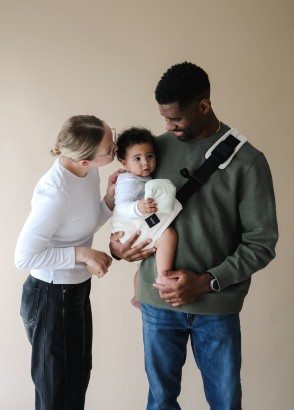
Dad and mum looking at toddler while dad carries toddler in a boba buddy hip carrier